In this article
- Should you build a custom CRM or buy one?
- What are the benefits of an off-the-shelf CRM?
- When does custom CRM software make sense?
- Can you own a custom-built CRM instead of renting one?
- Is a custom CRM worth it at your spend?
- How much does custom CRM development cost?
- What should you ask a custom CRM development company?
- Frequently asked questionsIs a custom CRM only for big companies?Can a custom CRM include the dialer too?Who owns the code of a custom CRM?What happens to my data when I switch?How is custom CRM development priced at Cleanform?
Most teams should buy a CRM, not build a custom CRM. If you have a few reps, a short sales process and a bill that doesn't hurt, a subscription is faster to start and someone else keeps it running. Custom CRM development is worth a look when the bill grows with every hire, when you've bolted three or four tools together to make one process work, or when your reps spend the day working around the software.
There's also a third option that most "build vs buy" guides skip. You don't have to rent a CRM or hire your own developers to build one. You can have one built around how your team sells and own it outright: the code, the data and the IP.
Should you build a custom CRM or buy one?
Buy, unless the subscription is costing you more than money. A good off-the-shelf CRM for a sales team gets you running in days, comes with integrations you'd otherwise build yourself, and lets you leave if it stops fitting.
Building it yourself is a different story. You hire or contract developers, wait for the first version, then own every bug, update and security fix after that. For a business whose product isn't software, that's a second company to run.
Owning a system someone builds for you sits between the two. You get the fit of a custom build without growing an engineering team, and you stop paying rent on seats. If you're leaving GoHighLevel, what its per-seat alternatives cost at 10, 25 and 50 reps shows the renting side of that math.
| Buy a CRM | Build it in-house | Own one built for you | |
|---|---|---|---|
| Time to start | Days | Months, plus hiring | Planned around your switch |
| Cost of each new rep | Another seat | Nothing extra | Nothing extra |
| Fits how you sell | You adapt to it | Yes, if you build it well | Built around your process |
| Who owns the code | The vendor | You | You |
| Who keeps it running | The vendor | Your developers | Whoever you want |
What are the benefits of an off-the-shelf CRM?
They're quick to set up. Sign up, import a spreadsheet, invite the team, and you're logging calls the same week.
They come with a lot you'd never build for yourself: email sync, app marketplaces, mobile apps, reporting templates. The vendor ships updates, fixes outages and handles security. And if the fit goes bad, you can export your data and move on.
For a small team with a standard sales process, that's hard to beat. Paying a developer to rebuild what a cheap plan already does is a waste of money.
When does custom CRM software make sense?
When the bill is driven by cost per seat and everything you add around it. The CRM is rarely the only subscription. A sales floor usually also pays for a dialer, a scheduling tool and something like Zapier to pass leads between them (how the main types of sales dialers differ).
Here's what that looked like for one client's sales floor. A per-seat dialer, a per-seat CRM, a scheduling tool and a Zap to keep them talking cost about $4,500 a month for eight closers. Every new rep was a $560-a-month decision before they made a dollar. And the Zap broke whenever one of the vendors shipped an update.
Each tool did its job. Together they meant four bills that rose with headcount and a team working out of four logins.
Can you own a custom-built CRM instead of renting one?
Yes. You can have one system built around the way your team already sells, and own it. That's what Cleanform does. We replace the stack you've bolted together. Sometimes that's one tool at a time. Often the CRM, the dialer and the Zap between them have to go together, in one switch, so nothing breaks in the middle.
Three things make it different from renting:
- You own it. Every build hands over the code, the data and the IP. It runs in a cloud account your business owns.
- No seat fees. We price what you need, not your seat count, so a new rep isn't a new monthly decision.
- Typically less than you pay today. You pay monthly, and the build payments have an end date. When they stop, the monthly bill is just hosting. Each subscription is cancelled the moment its replacement is live, so you never pay twice.
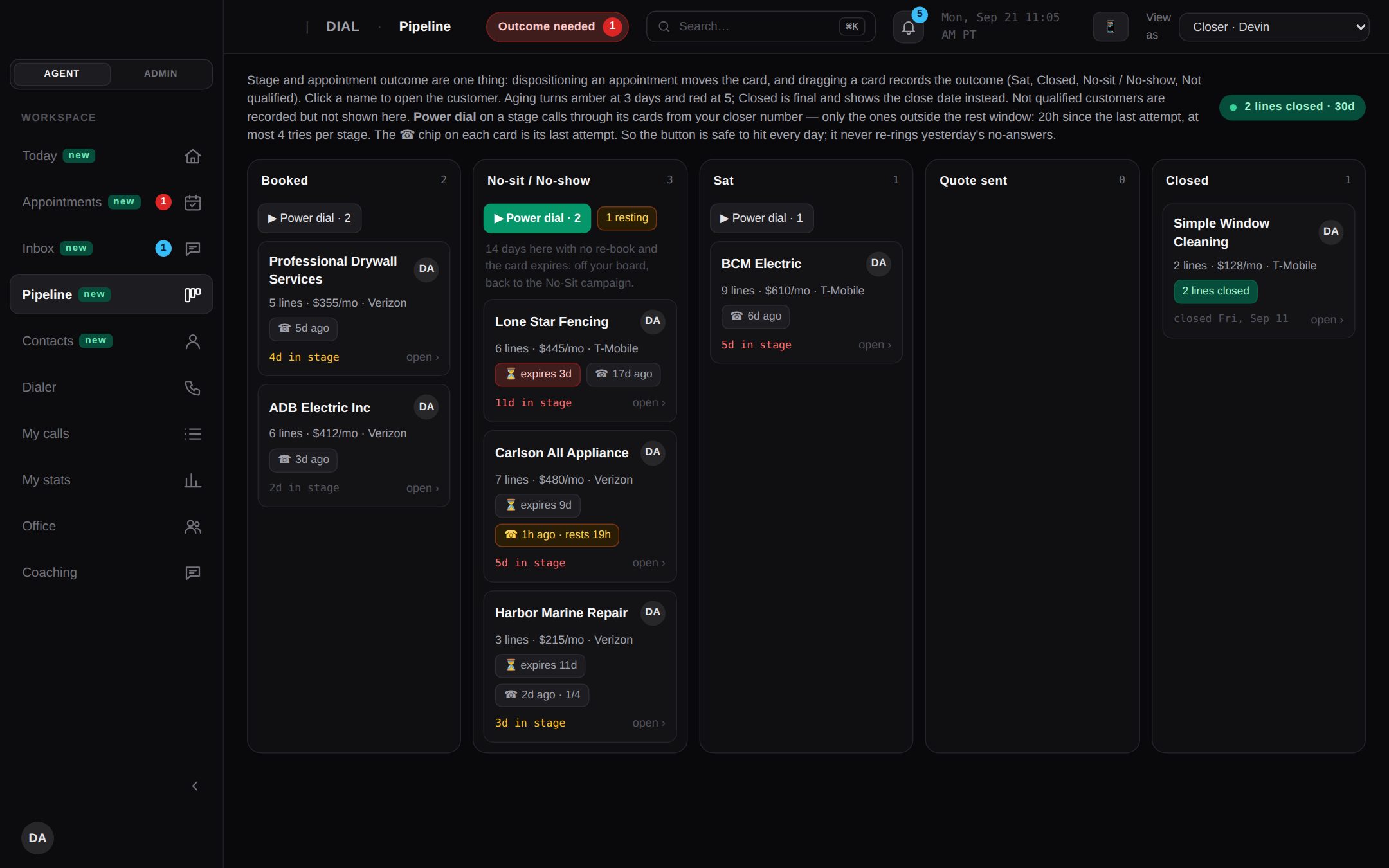
For that sales floor, four tools became one system. The dialer, call script, dispositions, pipeline and each closer's day now sit on one screen. Hosting runs about $300 a month, roughly 93% less than before, which works out to more than $50,000 a year. Each added seat costs $0. Read the full case study.
Is a custom CRM worth it at your spend?
It depends on your monthly bill, not your headcount. Add up everything your sales team pays for: the CRM, the dialer, texting, scheduling, the automation tool that glues them together.
- Under $1,000 a month, and the tools fit: keep what you have. You'll spend more time switching than you'll save.
- A few thousand a month and climbing with every hire: that's where owning starts to pay. The money you already spend can go toward something you keep.
- Somewhere in between: look at the trend. If each new rep adds seats in three tools, the bill only goes one way.
A team with 100 seats on a cheap plan may be fine. A smaller team paying for a premium CRM and dialer per rep may not be. The SaaS cost calculator adds up your stack in about two minutes.
How much does custom CRM development cost?
It costs whatever the scope is, which is why we don't publish a price. Agency price lists can't tell you much without knowing which tools you're replacing and how your team works.
Here's how it works with us. A free audit looks at the tools you pay for and what you spend on them. Then you get a quote and an interactive mockup of your system, so you see the price and click through it before anything is built. It typically costs less than you pay today, and the build payments have an end date. Here's how pricing works.
What should you ask a custom CRM development company?
Ask who owns the code, and get the answer in the contract. Whoever you hire, these five questions save a bad surprise later:
- Who owns the code, the data and the IP when the build is done? If the answer isn't "you", you're still renting.
- Whose account does it run in? Yours, or the developer's? Moving it later is harder than starting in the right place.
- What happens if we part ways? The software should leave with you, not stay behind.
- How does our data move over? One tool at a time, or all at once on a weekend?
- What does each new user cost? If the answer is "a seat fee", you've rebuilt the problem you were trying to leave.
If a developer can't answer all five plainly, keep looking.
Frequently asked questions
Is a custom CRM only for big companies?
No. Headcount matters less than spend. If your CRM, dialer and the tools around them cost under $1,000 a month and they fit, keep them. Custom starts to make sense when that bill keeps climbing with every hire.
Can a custom CRM include the dialer too?
Yes. In one sales-floor build, the dialer, call script, dispositions, pipeline and each closer's day sit on one screen, replacing a per-seat dialer, a per-seat CRM, a scheduling tool and the Zap that joined them.
Who owns the code of a custom CRM?
Whoever the contract says. Get it in writing before any work starts. With Cleanform, every build hands over the code, the data and the IP to the client.
What happens to my data when I switch?
It moves into the new system when the tools it lives in are replaced, whether that's one at a time or several in one switch. The old subscription is cancelled the moment its replacement is live, and your records end up in one place instead of split across vendors.
How is custom CRM development priced at Cleanform?
We don't publish prices. Each build is quoted after a free audit of your current tools. It typically costs less than you pay today, and the build payments have an end date. See [how pricing works](/pricing/).
Want your own number? Add up your software stack in two minutes, or book a free stack audit.